Dan Brown

Pinkas Synagogue

The Pinkas Synagogue is the second oldest surviving synagogue in Prague and one of the most affecting stops on the Jewish Museum in Prague circuit. Its origins date back to 1492, when a smaller prayer room was established beside a house known as U Erbů. The present building was commissioned in 1535 in the Late Gothic style by Aaron Meshullam Horowitz, a prominent member of the Prague Jewish community. The synagogue most likely took its name from his grandson, Rabbi Pinkas Horowitz. It served as a private family house of prayer, and a ritual bath (mikveh) was established in its vicinity.
Maisel Synagogue

The Maisel Synagogue was built between 1590 and 1592 at the initiative of Mordecai Maisel (1528–1601), primate of the Prague Jewish Town and one of the wealthiest inhabitants of Rudolphine Prague. Emperor Rudolf II granted him special permission to build it as a mark of recognition for his financial support of the Habsburg court. The synagogue was solemnly consecrated in 1592 on the festival of Simchat Torah.

Old New Synagogue

The Old-New Synagogue is the oldest surviving synagogue in Central Europe and one of the oldest functioning synagogues in the world. It was built in the second half of the 13th century, most likely around 1270, and ranks among the finest examples of early Gothic architecture in Bohemia. It was constructed by stonemasons from the royal workshop who were working at the same time on the nearby Convent of St Agnes. For more than 750 years it has served as the main synagogue of the Prague Jewish community, and services are held there continuously to this day.

Bastion U Božích muk (Bastion of the Wayside Shrine)

Barokní opevnění nad Folimankou

Nad parkem Folimanka, v zahradě Ztracenka, se skrývá jeden z nejméně navštěvovaných historických objektů Prahy a zároveň jedno z míst s nejkrásnějším výhledem. Bastion U Božích muk, někdy označovaný jako Bastion XXXI, je součástí systému barokního opevnění Nového Města, které vznikalo navázáním novodobých hradeb na gotické základy z doby Karla IV. Své jméno nese po drobné sakrální stavbě božích mukách, která zde kdysi stávala a připomínala poutníkům vstup do chráněného prostoru.

Petřín

Petřín in Dan Brown's Novel

Petřín Hill is one of the most dramatic settings Dan Brown employs in his novel The Secret of All Secrets. In the breathless chase that drives the entire story, Robert Langdon flees his pursuers through the Petřín Lookout Tower and the Mirror Maze below it — two structures whose labyrinthine character seems tailor-made for Brown's escape sequences. The maze, with its dozens of distorting mirrors fracturing every reflection into infinity, becomes a metaphor for the novel as a whole: you never know what is a reflection and what is reality, whom to trust or where the truth lies.

Mariánské Square

The Location in the Novel

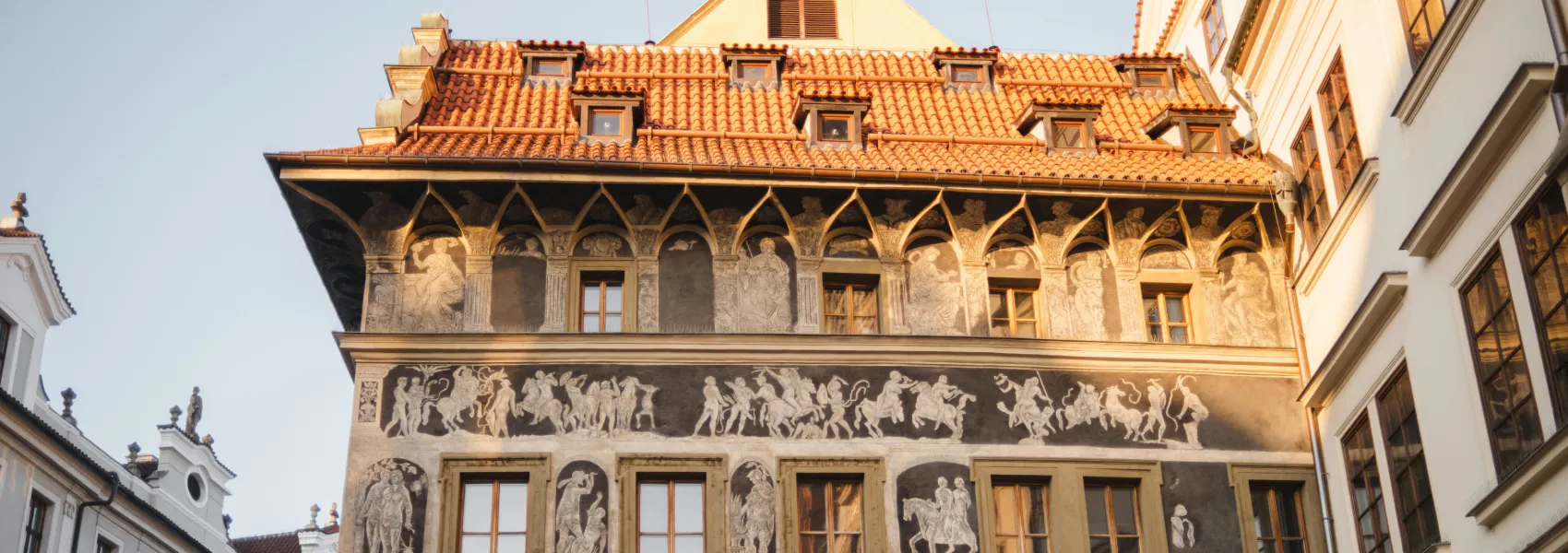
Mariánské Square is the setting of one of the most gripping scenes in The Secret of All Secrets. It is here that a dramatic chase unfolds, with the main characters pursued by Czech intelligence agents and snipers. Yet the square is more than a mere backdrop for the escape — it plays a specific and unmistakable role in the story. Standing beside the building of the Prague City Hall are two monumental sculptures, one of which becomes a temporary hiding place for Langdon. 

Both statues — Rabbi Löw and the Iron Knight — are the work of sculptor Ladislav Šaloun, who in his time was a prominent figure in Prague's spiritist circles and a devoted student of the Kabbalah. His studio was the venue for séances attended by, among others, opera singer Emma Destinová, František Bílek and Josef Váchal. This mystical background to the sculptor's work fits seamlessly with the spirit of the entire novel.

Hotel Four Seasons

Role in the Novel

Four Seasons Hotel Prague serves as Robert Langdon's home base in The Secret of All Secrets. The professor of symbology arrives in Prague as the companion of noetic scientist Katherine Solomon, who has been invited to a prestigious conference hosted by Charles University, and it is here that the two share their Prague stay. Brown chose the hotel deliberately as Langdon's natural habitat, a luxurious base in the heart of historic Prague from which the novel's events unfold.

Jewish Town

Josefov occupies one of the key locations in Dan Brown's novel The Secret of All Secrets (2025). Prague's Jewish mysticism, and above all the legend of the Golem, became one of Brown's most important sources of inspiration. The author himself explained that the Golem as a great protector served as the direct model for one of the novel's central characters, whose task is to protect the scientist Katherine Solomon, just as Rabbi Löw's clay Golem once protected the inhabitants of the Jewish Town.

St. Vitus Cathedral

Katedrála sv. Víta

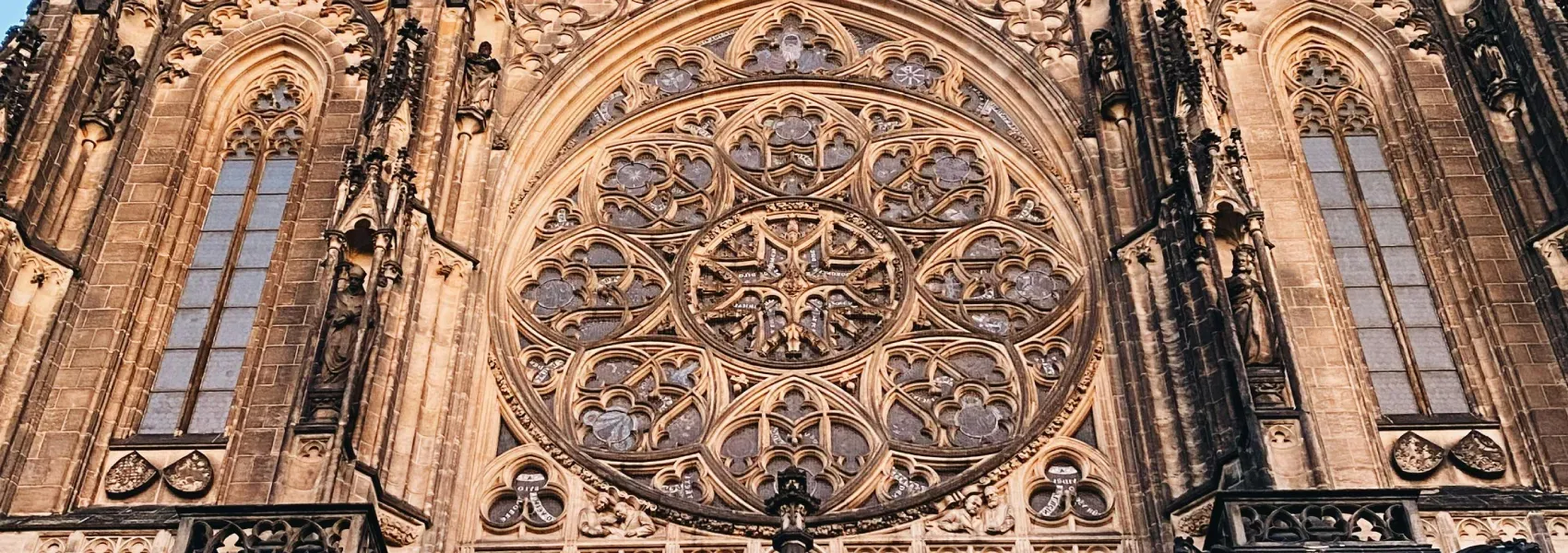
The Gothic cathedral rising above Prague Castle ranks among the most awe-inspiring sacred buildings in Europe and the most important symbols of Czech statehood. The structure, whose origins date to the 14th century, serves as the burial place of Bohemian kings, safeguards the coronation jewels, and its soaring silhouette has dominated the Prague skyline ever since. In Dan Brown's novel The Secret of All Secrets, it becomes one of the defining images of a snow-covered Prague and a place concealing the story's most crucial mysteries.

Prague castle

Pražský hrad

A location from Dan Brown's novel The Secret of Secrets

Historical Background

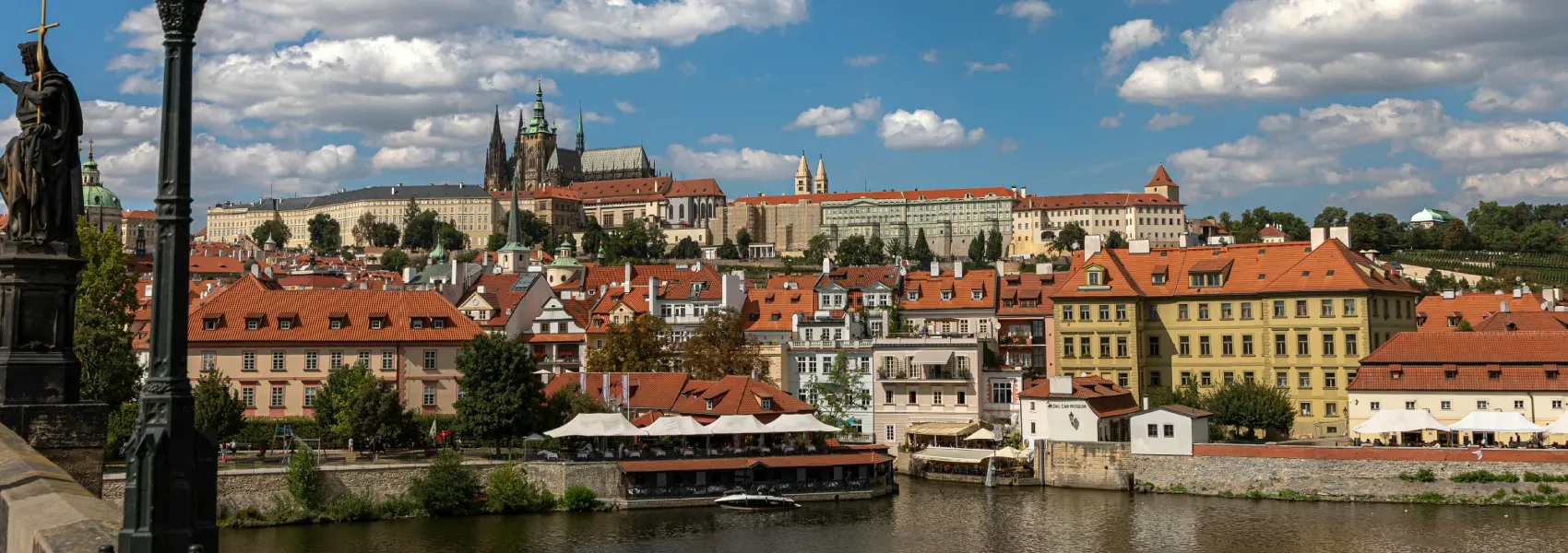
Prague Castle is the largest castle complex in the world and the most visited landmark in the Czech Republic. It sits on a rocky promontory above the Vltava river, covering an area of nearly 70,000 m² – roughly the equivalent of ten football pitches. With its dimensions of 570 metres in length and 128 metres in width, it holds a record in the Guinness Book of Records as the largest ancient castle on Earth. Together with Prague's historic centre, it is inscribed on the UNESCO World Heritage List.