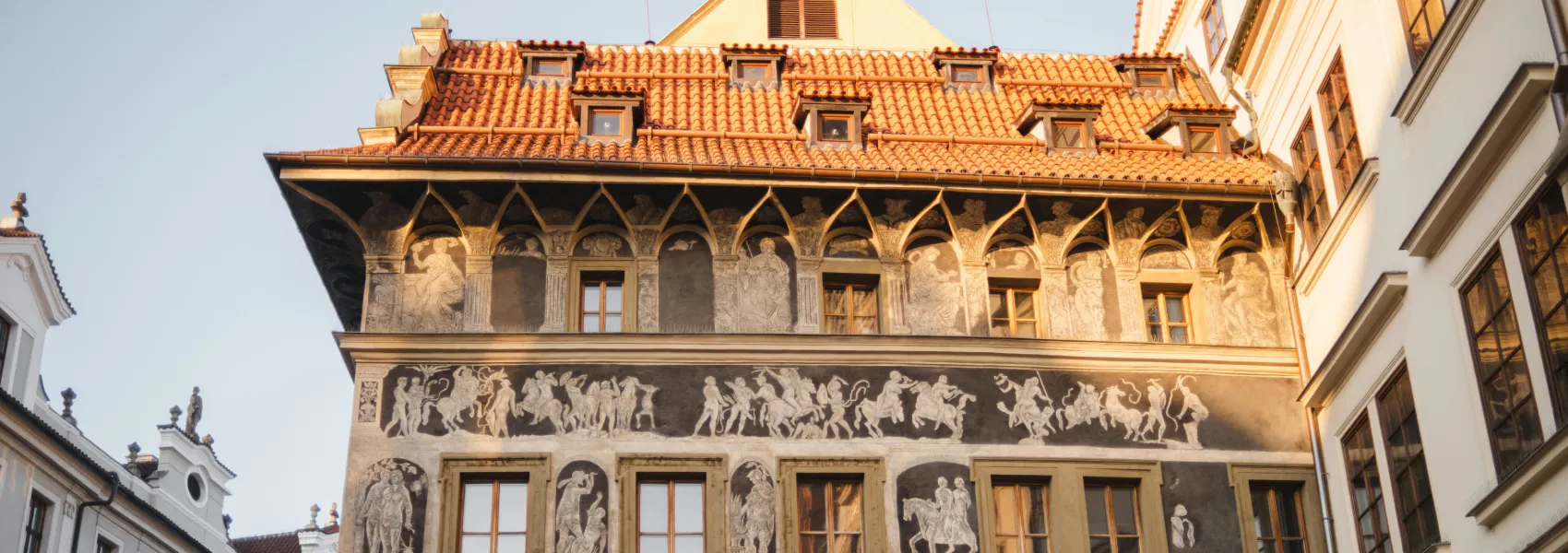
Rudolf II

Mariánské Square

The Location in the Novel

Mariánské Square is the setting of one of the most gripping scenes in The Secret of All Secrets. It is here that a dramatic chase unfolds, with the main characters pursued by Czech intelligence agents and snipers. Yet the square is more than a mere backdrop for the escape — it plays a specific and unmistakable role in the story. Standing beside the building of the Prague City Hall are two monumental sculptures, one of which becomes a temporary hiding place for Langdon. 

Both statues — Rabbi Löw and the Iron Knight — are the work of sculptor Ladislav Šaloun, who in his time was a prominent figure in Prague's spiritist circles and a devoted student of the Kabbalah. His studio was the venue for séances attended by, among others, opera singer Emma Destinová, František Bílek and Josef Váchal. This mystical background to the sculptor's work fits seamlessly with the spirit of the entire novel.
Prague castle

Pražský hrad

A location from Dan Brown's novel The Secret of Secrets

Historical Background

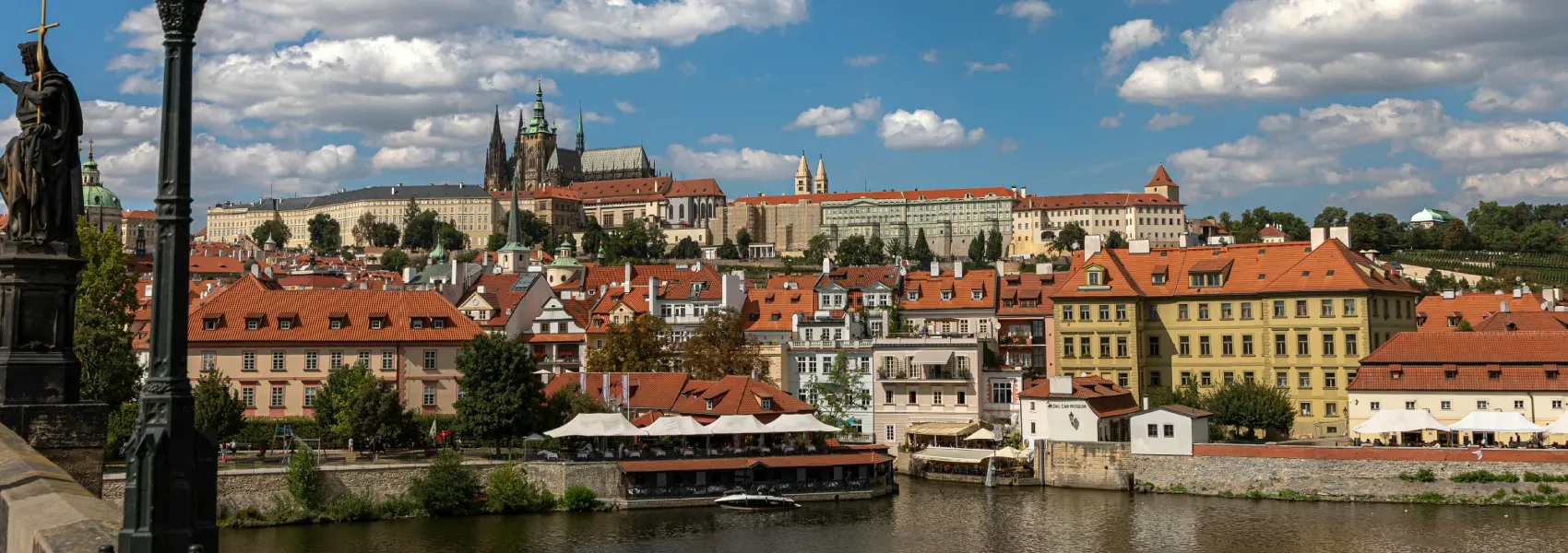
Prague Castle is the largest castle complex in the world and the most visited landmark in the Czech Republic. It sits on a rocky promontory above the Vltava river, covering an area of nearly 70,000 m² – roughly the equivalent of ten football pitches. With its dimensions of 570 metres in length and 128 metres in width, it holds a record in the Guinness Book of Records as the largest ancient castle on Earth. Together with Prague's historic centre, it is inscribed on the UNESCO World Heritage List.

Old Town Hall

Staroměstská radnice

The Old Town Hall in Dan Brown's Novel

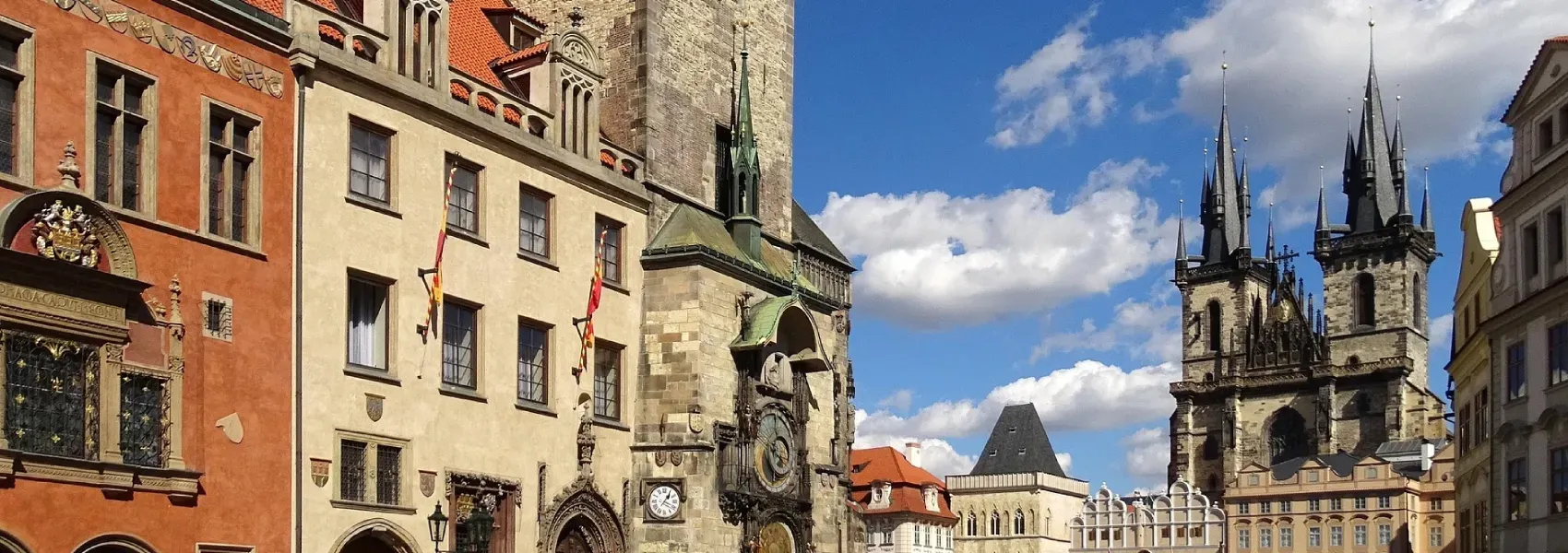
Old Town Square and its centrepiece, the Gothic tower with its famous astronomical clock, are among the most important settings in the novel The Secret of All Secrets. Dan Brown places several pivotal moments of the story in this space. The mysterious figure of the Golem moves through the deserted square at dawn, casting a contemptuous glance at the clock — its apostles, he thinks, have been trudging their pointless circuit since the fifteenth century, drawing ever new flocks of onlookers to their spectacle.